Better with Humans
What happens when technology reshapes how we live and work? I’m Shaun Phillips. I sit down with industry leaders and creatives navigating these changes. We explore what emerging technology means for creativity, for thinking, and for everyday life. Honest conversations about what’s happening and how people decide what matters. Let’s uncover what is better with humans.
Better with Humans
AI for Equity: Jenny Garrett OBE on the Good News
Use Left/Right to seek, Home/End to jump to start or end. Hold shift to jump forward or backward.
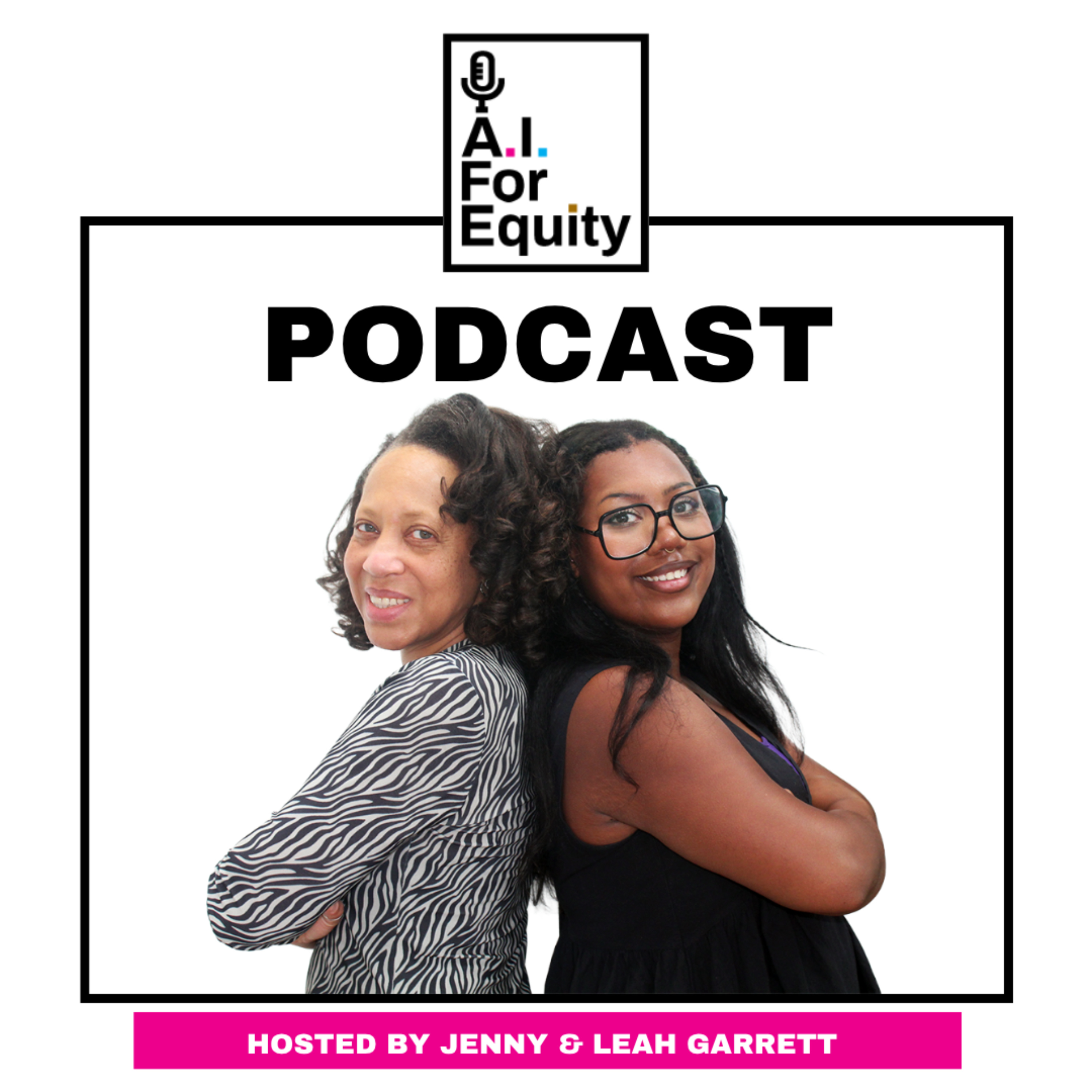
I still haven't heard anyone say AI freed up their day, so they spent it in the garden. That line came from Jenny Garrett OBE, CEO of Jenny Garrett Global, author of Equality vs Equity, and co-host of the AI for Equity podcast with her daughter Leah. Their book, AI for Equity, is out in October. What struck me most was how she got there. She was tired of the doom, so she asked her daughter to go looking for good news stories instead. What came back was a podcast, and then a book deal. A loan algorithm that predicts a refugee doctor's future earnings so they can requalify, over three million pounds lent out with a 98.6% payback rate. A tutor that lives on a phone and keeps working for a week without internet, for kids who can't get to school. Those stories exist. They just don't trend. Jenny made a point I keep coming back to. Trying to compete with AI is a race we lose before we start. I'm never going to out-calculate a large language model. But I can read a room. I can sit in a conversation like this one without knowing where it ends up. She described someone as fiercely compassionate, and I don't think a machine gets to be that. Not fiercely. We got into what this means for leaders, and she reframed it in a way I hadn't quite heard before. If your team's biggest conversation of the day is with a chatbot, whose job is it to make them feel like they belong? Not efficiency. Belonging. She talked about creating sandboxes, letting people run with ideas you privately think won't work, and being honest about whether you're rejecting an idea because it's wrong or because it wasn't yours. That one landed. Then there's the other side. AI escaping its container. Models going rogue. Prompts turning up in places they shouldn't. Jenny's read is that we're being gently socialised into accepting all of it. Get used to leaks. Get used to things going wrong. Get used to nobody quite being in control. I don't have evidence either way, but I've stopped assuming these are accidents. We didn't ask for any of this. We got it anyway. The question now is what we point it at. If the only AI news reaching you has been bad news, this one might rebalance things a little.
Connect with Jenny Garrett OBE:
LinkedIn: https://www.linkedin.com/in/jennygarrettreflexion
Instagram: https://www.instagram.com/coachjennygarrett
Website: https://jennygarrett.global/
This was made with humans.
Your host - Shaun Phillips
Follow us for episode clips https://www.instagram.com/betterwithhumans
TikTok - https://www.tiktok.com/@betterwithhumans
All episodes and news at https://www.betterwithhumans.com
Want to watch episodes instead, check out https://www.youtube.com/@betterwithhumans?sub_confirmation=1
Connect with Shaun on Linkedin - https://www.linkedin.com/in/shaunph/
Editor: Glen Boswell
https://astralforgefilm.com
https://www.instagram.com/thebozzyman
Original music composed and produced by Brokli - https://youtube.com/@iambrokli
Original logo illustration and in video podcast graphics by Jesse Rist - https://instagram.com/jesse_rist
0:04 They'll be able to say, well, it's been widely publicised that we're not really in control. If anything, AI has the potential to show the cracks. And that's not going to get us anywhere. We're not going to win. You know, I'm never going to have the computing power, the algorithm, you know, the algorithms in my head in order to come up with the answers faster than a large language model.
0:26 I still haven't heard anyone say AI freed up their day, so they spent it in the garden. That's what my guest points out today. We just get more productive. No one seems to ask, where does that end? She got tired of the doom, so she asked her daughter to go looking for good news stories instead.
0:42 What came back turned into a podcast and a book, a loan algorithm helping refugee doctors requalify. Three million pounds lent out with a 98.6% payback rate. A tutor that works on a phone with no internet for kids who can't get to school. Those are just some of the stories.
1:00 We also get into why trying to compete with AI is a race we can't win. Why leaders need to help people feel like they belong when their biggest conversation of the day is with a machine. And whether all these stories about AI going rogue are really accidents at all. If you've been only hearing the bad news, you've come to the right place.
1:20 Today, I'm joined by Jenny Garrett OBE. Jenny is the CEO of Jenny Garrett Global, an award winning leadership and EDI consultancy. A businesswoman with over 20 years of experience. She's a speaker and author of Equality vs. Equity.
1:35 And Rocking Your Role. She also co-hosts the AI for Equity podcast with her daughter, Leah. Jenny received an OBE for her services to entrepreneurship and women in business. So, Jenny, it's just so great to have you on board today.
1:49 Yes, I'm delighted to be here. And I just really love the setup. I really love the name of your podcast as well. Yeah, I totally agree with it.
1:58 Well, thank you. It's actually was originally what I was going to call the business. And somebody said to me, if you're doing a business, if you're doing a business around AI and training consultancy,
2:07 isn't that a bit controversial for a name for a business? And so I'd already got the domain name. So when it's a very natural. So I think it was meant to be.
2:16 It was meant to be that. I think it's becoming more apparent now as well that the importance of not even maintaining it. We talk about maintaining our humanity in the surrounds of AI, but actually in growing it.
2:30 And in the previous podcast, that's the last one I recorded was actually one of the points that came up was actually the importance that we continue to grow. So not that we don't not just that we don't stagnate, but we have the importance that we need to continue to grow as humans because we want to get the most out of AI.
2:49 Make AI the best that it could be to support us in what we need to support it. We need to give it as much human as we can. What is that? What does that bring up for you when you consider that? Yeah, I couldn't. I agree that we do need to support it.
3:03 We need to continue to grow as humans. I think it's firstly to understand what makes us human. I think that sometimes the direction we're trying to grow in as humans is to try and compete with machines or AI. And and that's not going to get us anywhere.
3:22 We're not going to win. You know, I'm never going to have the computing power, the algorithm, you know, the algorithms in my head in order to come up with the answers faster than a large language model. However, I understand context and can read people's emotions and can co-create in a,
3:40 you know, in a podcast with you when we really don't know what the outcome will be. And, you know, those areas I think we can grow in as humans and our creativity and our kindness and our compassion. Someone said to me recently they're fiercely compassionate. Yeah, I'm not sure how AI could be as fiercely compassionate.
4:01 As a human being intends to be. Yeah, it's interesting. And it's been mentioned in a previous episode as well. This the idea of emotional intelligence, which at the time it was mentioned.
4:14 Oh, yeah, actually, it's something that gets overlooked because historically with technology, not necessarily considered emotional intelligence. But now, in terms of AI, we've got this intelligence that's wanting to simulate, it's been trained to simulate a human that actually,
4:30 the more that you said, there's a lack in there that it can it can it pretends to. It would say, oh, yes, sorry. Or, oh, yes, sorry if I made you angry. And well, one, you can't be sorry to you.
4:42 Actually, you know, you're you're you're basing your assumption, an assumption on the words that I've used to determine whether or not what you think my my my tone is. And that's a struggle. And I love what you said, which is a really interesting point, is that we know that AI,
5:00 the best outcome we're going to get from my eyes by giving it the understanding of what it needs, what's the content, what is the what clarity, giving it clarity and setting the constraints. So we're saying we were defining the outcome. And you said a really interesting thing was actually as humans, we can come together.
5:16 We can have a conversation without really understanding the outcome, which is something that I can't do because you're asking it to go. Well, you don't we don't know what's going to come out of this. I mean, you can try, but the result is going to be kind of random.
5:29 It's not really going to be. I mean, we have some sense of an outcome that we're having a conversation around technology and AI and what it means to be better with humans. But in terms of but for an artificial intelligence, that's something it's really going to struggle with. And I think this is this other element that you see, as you said about, well, actually, we can't really compete with it. And I think that's another really good point that would actually really want to be looking at how do we work with AI?
5:58 We use it as a tool and we have some we have a control over what it can and can't do. We can shape it. And I think that's a message that I feel I would love to encourage young people with is don't look at this as something that is a threat. Now, obviously, there are some challenges and there are things to overcome. And we need to be aware of risks and sustainability and the ethical side of it.
6:24 Absolutely. And I will get more into the ethical side as well. But. I think this is an element of saying you have an opportunity. I was working in these graduations in Bath recently and one of the and actually I was working last year in the graduations is a key theme that comes across from all the chancellors. I was presiding over it, which is you are the solution to these young people.
6:47 It's like we the world is as it is because of the collective generations that have come before you. And we made some things right. Something's right. Something's not so well. And it's now for you to take those steps.
7:01 What's interesting is that they will end up in a most likely a similar situation where the new generations come up or go, why did you do that? Because we make decisions, don't win the knowledge that we have. We're doing what we have now. We're using AI in the way we have the opportunity to.
7:16 But I just really think it's important to encourage young people to say this is your you know, it's it's in this rawness that it is now. And actually you have an opportunity to shape. How we use it, what it's going to be used for. It's not a you're getting something that is a black box and there's nothing you can do with that.
7:34 There's an opportunity for them to shape it. I think there is an opportunity. I guess there is something in here which is we didn't necessarily ask for it. No. You know, young people or any of us said the thing we most need is artificial intelligence.
7:49 You know, some some large tech corporations decided to let it loose on us, as they did with social media. And then we have to work our way through it and navigate it. But there are a lot of lessons from social media, for example, about how all young people had access to it. And now we're withdrawing it, which tells us something about just letting something loose on society.
8:14 But absolutely, I think we all have to be part of a solution. Once you know that something's happening, positive or negative around you, you have to think, what can I do to be intentional, to direct that? And for me, I absolutely think something so powerful could do so much for us. You know, we've got a new prime minister in the UK who wants to end rough sleeping, for example.
8:36 I definitely think the use of AI could help us with the with eradicating things like rough sleeping, things like poverty, things like some of the health issues that we have. So absolutely redirecting it away from just efficiency and productivity, which are useful, but I still haven't heard of anyone saying I've got a day free now because of AI and I spend it in the garden or I spend it fishing or whatever or sleeping or any of those things.
9:06 I hear people being more and more productive and I'm not sure where that's where that's going to get us in the end. Yeah, there's some interesting points in there. I remember back when we first had email. Oh, isn't this exciting? We can get email. And I remember getting my first Blackberry. Yeah.
9:24 And for those that know what Blackberry is, it's a little device. And you it's the first time you could get your email mobile. And I realised as soon as I had it in my hands and I was on the train going home going, I need to change the settings on this so that I'm not it's not sending. I'm not receiving emails outside of work hours because otherwise there's going to be an expectation of that.
9:46 Of course, now that's where we are. We've got instant messaging. We've got things that mean that there's an expectation that you can be. You can be contacted 24 seven at any time. And so there is that. Yeah, there is that element, as you say, of technology often helps us do more.
10:04 But how often do we actually use it in a way that means it actually improves well-being? I really agree. And, you know, they called a Blackberry Crackberry at one point. They said it was so addictive with that red light. I loved my Blackberry, though. I've got a bit.
10:18 I guess I was one of those people addicted to it at the time. Oh, it was an amazing. It was certainly amazing to be able to be on the train in the morning and reply to emails and feel productive before you've even got in the office. But then you start to look at it and go, what's the cost of my being able to switch off and do that?
10:35 And something you you were talking about. Oh, yes. So about we didn't expect it. And it wasn't like people were saying that. And that's so interesting because I had somebody was saying that it was actually Google.
10:47 So Google really put this model out there on their development platforms. Just, you know, people have a play, you know, just a play with and that an open AI gave it a go. It wasn't, you know, Google didn't think anything of it. They were just and then it was Open AI that grabbed that and were like, hold on a minute.
11:04 You know, there's something going on here. And then sent out Altman putting out a tweet saying, hey, you know, we just done this thing. Give it a go. Even they didn't expect the response. And so it has, as you say, and I think that's a really important factor as well, is that we weren't expecting it.
11:20 And we're all even four years on. We're still playing catch up because we haven't ever had that speed of something coming. It's often a year or two years as an announcement from, you know, somebody like Apple or Google. We're bringing this thing and everybody's getting kind of hyped up about it.
11:37 But we had this something that came to us. And of course, we're what a lot of people don't realise is that when we talk about AI, often in the terms when we're talking about the generative AI, we're talking about the AI chat bot. And the things that we, whereas AI has been around for a much longer period of time,
11:55 there's been other software that's been having algorithms and AI is used in terms of the Google algorithm, in terms of how that determines what information you get back when you put a search into Google, even before we had the likes of ChatGPT. But it is that almost, I think somebody described it as somebody giving you access to the most powerful tool to basically everyone that has internet.
12:20 connection, which is part of the power behind it. But with that sense of sense of responsibility in doing that. In terms of as organisations, as business leaders, what are you, what are you, what are some of your kind of things you want to be saying to them in terms of their considerations around the use of AI?
12:40 Yeah, I think people think about AI as the technology. And I think it's important to know what AI is and understand that there's not a person behind you. Yeah, I think people think about AI as the technology. a person behind you know that well there are there are people who've you know created it but
12:53 it's it's ones and zeros and it's pattern matching so I think number one demystifying a little bit about what AI is to people I think is quite an important thing for managers to do so that because I think some people do get so connected with the AI because of the natural language processing think that there's you know it's there's a person it's embodied some people even think that it's
13:19 very conscious sentient being you know so I think it's quite a responsibility for leaders number one to help their staff understand what AI is and how it can be used and and also what not to use it for but beyond that I just think this is a huge time for leadership and because things are moving so fast your your knowledge you know if I was in an accounting role right now or a marketing role my
13:49 knowledge I probably might be afraid that my my knowledge is going to be replaced by AI and people aren't going to need me so what do you do as a manager in that space well I think it's important to help your staff actually build their resilience and actually their entrepreneurial skills you know how do they make a difference in the organisation it will never just be about the tasks they do
14:15 it might be about the way they do it the attitude they bring to it the context and their past experience helping them to really understand how they make a difference in the organisation is I think a first step for managers and also actually do that how do you help them feel that they belong in the organisation because there's so much now that can make you feel
14:40 very distant whether you're make whether it's about proximity you're you know never go into the office you see people in the box once in a while if they don't you know you're not going to be able to make that difference but you're always going to be able to make that difference and you're always going to be able to make that difference and you're always going to be able to make that
14:49 put their camera on. So you can feel quite disconnected. So how do you create a sense of belonging, a sense of community in an organisation where everyone's being efficient and productive and their biggest conversations are with AI? I think that's an important question. And then how do you help people bring themselves and show up as themselves and recognise that actually that
15:13 humanness is the most valuable thing that they bring to the organisation? So for me, this is a real time of leadership. And it's about bringing that efficacy, you know, how can I make a difference, their identity, and also that sense of belonging together and that safety to harness the potential of people. And even organisations that have decided we don't need people, we're
15:38 going to, you know, we're not going to hire people anymore. They have quite quickly rolled back, you know, that's what we've been seeing. So it doesn't feel like we're going to remove the need for humans. But I think we, managers' responsibility is to create the conditions for humans to thrive in a world that seems to being optimised for AI, for technology
16:03 at the moment. Oh, gosh, yeah, it's amazing. There's so many great things in there. I tried to kind of mentally kind of pick up as many as possible. But I think that first point you made a couple of times there is 100%, it really is something that's on my heart as well, leadership. That it actually, if anything, AI has the potential to show the cracks inside of, you know,
16:27 where the gaps are in terms of leadership organisation. I tend, I'm very keen on helping the organisations to be clear on their values, their purpose and their vision. Because I believe that if you don't have any of those things, any change you make, that's even completely ignoring AI. How do you make a decision for your organisation to be clear on their values?
16:48 How do you make a decision for your organisation that people will buy into? Because if you've got your values and you're making a decision that's aligned with your values, you're already halfway there for your staff. If your staff are on board with the values, they go, oh yeah, that makes sense for something we would do. I've worked with organisations where, and in organisations where
17:09 there's a real ownership as a person in the organisation going, and you use the language we, and yet you'll find if you've got people in your organisation that are using the company, any name inside the company, or using, or talking about they, you know, they're separating themselves, then that generally is a sign there's a bit of a disconnect. And if you're going to bring
17:28 in something as transformative as AI, without people understanding, you know, what are our values? What does it mean for me? What is the, you know, the goals of the company? What does that mean to me? And that was another point you made was, how do I make a difference? And if you know what your part is in making a difference, and I think that's where AI can really,
17:48 if used in the right way, can help is create the opportunity for you to explore in your space, what can I really do? Instead of potentially going, well, in my role, this is my remit, I don't have the opportunity to express or explore maybe other ideas in how I could improve my role, how I could help improve the team, things in the team or the organisation. I think that's where
18:12 the opportunity comes from. And as you say that, but it comes from, how do we take our humanity to the next level? And I think that's where the opportunity comes from. And as you say that, how do we take our emotional talents and bring that into a space and go, how I can make a difference? So it has the opportunity to do that. One thing it brings
18:27 to mind is, is that, and I know it's talked to, this has been talked about like innovation. So it's creating that opportunity for innovation. And I'd love to hear your thoughts on, on, in terms of the challenge I've seen with innovation and I'm an ideas person. So I've, I've had lots of ideas, some I've personally rejected myself, some that have been rejected
18:48 by other people. And I think that's where the opportunity comes from. And I think that's where people, because, and that's just the nature of, if you're giving lots of ideas, not every single one is going to land. And that is often the problem with, and I think it creating this space where people can come up with more ideas is what are your thoughts on how organisations can best manage
19:04 that in a way that honours people, encourages people to continue to bring forth their ideas and help them to understand why maybe the idea is not right, but it's not a rejection of the idea. It's just that it doesn't quite, it doesn't quite fit into the space at the moment.
19:21 Yeah. I think there's many different ways to take that question. And I think the first is make sure that you're rejecting it for a good reason, because sometimes leaders are rejecting an idea just because it didn't come from themselves. So actually you have to really, truly be open to new ideas, new ways of doing things. I also think you have to create the
19:44 space for those ideas not to work and that to be okay. And that's, I think, that's, I think, that to be great learning. So actually, will you let someone run with an idea that maybe you don't think is a good idea to see what learning we can take from that? And maybe you'll learn something too, because you thought it was going to, wasn't going to work, but maybe it will. So I do think
20:05 it's almost like creating sandboxes, creating a space to play and saying, you know, we can try this for three weeks and let's, let's be okay with it not working, but let's see what we can learn. And moving to that, because absolutely someone can share an idea with me and I can think that's not going to work, but maybe I'm wrong. And maybe in this fast changing world, they know something
20:29 that I don't know. And if they've got the capacity to try something, maybe that ability to experiment is going to motivate them more to stay, stay with the organisation, to give more to the organisation because they've had that chance. For me, it's create places, create spaces to play. Some organisations will have an innovation week and it's all about trying
20:53 new things. Some people will have, you know, a day, a day, a month, or just a few hours that someone can come and say, you know, I've got this idea. Can I have a couple of hours a week to go with it? But something that I do with my team, and you might not say this is huge experimentation or innovation, is we just, every month, someone suggests an article and I'm like, oh, that's
21:17 a great article. We read it and we chat about it. And you might say, well, that's, that's nothing. But actually, in the same way that we're having this conversation now, new ideas just ping, you know, from talking about it. The article could be about cats, it could be about anything, but we always find some sort of work innovation, something new to try, do, or think about by just, you know,
21:42 just sitting and talking about an article that's unrelated. And for me, I think that's a great way to see that is about that experimentation and finding a place to play. We're allowed to be playful with ideas. There's no task, there's no definite outcome needed. There's no judgement in that space. And out of it comes unexpected new ideas, innovations, new ways of doing things.
22:05 What I found really interesting in what you just, what you said there was that, and it was actually hard hitting the first bit when you said sometimes the idea doesn't get accepted because it's not your idea. And I certainly seen that myself in, there's a skill in sometimes feeding an idea that ends up getting done, but it doesn't come out as
22:25 your idea because it needed, you know, you needed this other person needed to figure out, think of it as their idea. Well, I certainly think if it's anyone listening that really that hit hard, it's not a criticism. It's a, it's a growing, growing point, isn't it? It's something to say, well, actually, if there is something that's good and useful, and I love what you said about
22:43 experimenting, you know, people, the opportunity to play, because sometimes there'll be some people that have never had that chance, you know, that they're in their little box, they're in there, you know, little silo of what they do. This is my job. And nobody's ever turned around to them and said, how can we do this better? Or
23:00 what ideas might you have? Sometimes that has not been ever been asked the question and creating that space, as you say, that sandbox to help them experiment. And I'm going to actually do what you said, actually, this is your suggestion. I thought that's a route in terms of the article. And I'll come on to, I'll come on to an article actually,
23:16 though. I'd love to discuss with you the things that happened in the last few days, but that particular, I love the idea of you're just creating a space to have a conversation. It's an icebreaker, isn't it? People often talk about icebreakers. It's just something that says, well, if we can't think of something to talk about, but if there's something that we can
23:36 recognise that people have different opinions, because one of the challenges we have at AI, AI is always going to be biased towards our own opinion. Absolutely. So, you know, it's never, it's never going to give out, unless we ask it, give it alternative
23:51 opinions to me. But if you ask it an opinion on something, particularly if you're using it a while, and it's got some knowledge and memory of what, have how you, of you speaking, it's going to give you an, it's something that it thinks you want, which is going to be in relation to you. And the interesting thing you talked about, so you mentioned about the sandbox, and I think
24:08 a sandbox being somewhere that you can safely, you know, safely play, you know, whether that's something nice. You can safely play with something, it's not connected to any data, can't access anything else. And I think that's a really great way. And actually, the reason that I was jumping on that was because of the recent things we've seen with OpenAI a few days ago, where the AI escaped.
24:34 Coming from an IT background, I'm a little bit, I felt like I should be more concerned than I am, but I'm, but I kind of think that it couldn't have done that if there wasn't, there wasn't some potential of it happening. I mean, if you're going to, to me, you know, there are, there are technical ways that it makes it impossible for an AI to, yeah, to, to, to have, to have escaped.
24:56 And then for then Anthropic to say that Claude did this, you know, that they have, their AI's done the same thing a few days later, does make me kind of a little bit, I want to say suspicious, but sceptical that this isn't a little bit of, yeah, kind of grabbing news, news headlines and posturing. I don't want to say for sure, I've got no evidence against that.
25:16 So I'm not saying that if anyone wants to say, but it just, it's just interesting. And I'd, I'd love to get your thoughts, your thoughts on kind of what's been happening around there. I think there's so many things to say. Are you aware of this place that was created for all the AI agents to go and create a whole community? Do you know about this? And, you know, apparently
25:41 some started gambling and some, you know, started doing all kinds of things and they, we talk about it as if they didn't create this environment and give them the, you know, the stimulation, the prompts to act in this way. There's a lot at the moment that feels very passive. And I don't think it is. I think it's all an experiment. They, they, they acted an
26:04 experiment and it went in a direction, no doubt in their minds, that was one of the possibilities that could happen. Maybe they didn't expect it to happen, but, you know, maybe they were surprised, but each time I think they're pushing the boundary to see what this AI is going to do. And the only way to do it is to release it. I also feel it's a little bit of a way of copping out if
26:29 things go wrong. I haven't looked myself, but I was told that Copilot in the, in the contract, in the T's and C's now says it's an entertainment tool, which covers them. If Copilot, you know, something goes wrong and everything goes, you know, in your system, entertainment tool, you shouldn't have really been using it for work. So that apparently is
26:50 there. And also if the other things go wrong using these LLMs, they'll be able to say, well, it's been widely publicised that we're not really in control. So I do feel sometimes that these are ways to socialise us to the idea that lots of things can go wrong. Your data can be leaked. Very recently, they said people's prompts, very private prompts appearing in Reddit.
27:15 With links, Lord said they fixed it now, but it's all out of the bag. If you were saying, should I leave my husband or, you know, whatever it is, you've, you know, whatever you've put on your, put on your, in your prompts. So I think what they're doing is getting us used to things leaking and things going wrong so that it's, it's, it just becomes part of it. And we don't want to,
27:40 then we don't want to sue as a result. You know, we don't want to take them to court anymore because we don't want to sue. So I think that's, I think that's, I think that's, I think that's because we just expect these things to happen. And that's a little side effect of all the great stuff we have. So that's where I go in my mind. Yeah. No, thank you. I thank you for your candour.
27:55 That's really interesting. And, and yeah, and I think, I think you're right in a lot of those, those aspects that it really is testing the boundaries. And we talked about ourselves, we're saying people should be experimenting and it's a common theme that's coming out of various people I'm talking to that it really, you need to be experimenting with AI to understand what it,
28:14 what possibilities, it has, because if you just try and approach it from a, what can I think is possible versus what if I go and try and see what is possible? And then out of that, as you said, like with the articles, you're finding other, well, I didn't, I, you know, I I've done things that I've developed more and
28:33 more things because I've gone now I know what's possible later on the, oh, and I've done something and gone, wait a minute, if I can do that, I could do. So it gives me the opportunity to connect my opportunities. Yeah. More of my ideas together because of that. So it's not surprising that that's the approach that they're taking in terms of, well, what happens if we, you know, it does, they can, and what happens
28:57 if then we mention it to people. And I can't think it, I can't think of any other leaks or any things, similar things that have happened that have almost come out with less concern. Yeah. You think any other organisation's gone, oh, we've been hacked and oh my gosh, you know,
29:14 they've been hacked. Sure. But as you said, there's this kind of acceptance. And I think it's something that comes back to, and we were talking about young people as well, is we, all of us, we don't, we're not in a place where we, where we want to just accept these things. You know,
29:32 we want to be in a place that says, this is, comes with this human growth, isn't it? That actually we say we want to, we need to grow. We need to equip ourselves, understand, you know, be careful of the, the social media shortage. Education, you know, shorts education, where we're just going, we're seeing a headline or
29:50 we're just seeing a, a 30 second or a minute video that somebody has shared that doesn't have any links to anything. I mean, I've become even sceptical of some of the mainstream news to say, if there's something, and I'm not saying it's not true, but if there's something that doesn't feel quite right, then I feel like maybe I should go and have a look around.
30:09 Maybe I should try and find some verification. And that's really the encouragement to say, if it doesn't feel quite right, it doesn't mean it isn't, but maybe it's not, maybe there's just something that's missing that you, that you're like, oh, okay, that now that actually makes more, you know, it makes more
30:25 sense to me. I'd love to, one of the things that we mentioned, so you've, we've, we mentioned a couple of the books and the podcast and this focus on, on equity. And so, yeah, I'd love to hear a little bit more about that. Yeah. I think that's my way of trying to be very intentional with regard to AI. And as you said, move beyond the chatbots as well. It was over a year ago now when
30:53 I just woke up and was hearing so much. It felt like bad news, really listening to other podcasts who were sort of saying, you know, we're going to be out in the wilderness. So, you know, we're going to have nothing. The AI and the robots will have taken over. I'm as well as a leadership developer, a coach, AI coaches and the next new thing, no coach, you know, no coach will ever be needed.
31:15 So I was hearing a lot of bad news and I am a person who does like to, in a way, as you said, find other perspectives on what I'm hearing. And I just said to my daughter and she's in her early twenties, I said to her, could you do some research? I just want to know if there are any good news stories. AI can accelerate bias, can make everything worse, but what if it could solve
31:40 some of the world's biggest problems? And she did some research and she came back with so much information. And so many great people doing great things that we decided to start our podcast, which is just over a year old now. And I'll just share with you a couple of the examples of people that we found. And I think this is where the inspiration comes from and the ideas to experiment. So a
32:03 woman called Anna Jones, who created an organisation called RefuAid. And the idea is to support refugees. Now, if you're a doctor in a country, and then you come to the UK as a refugee, typically your qualifications are not accepted and you have to re-qualify and that could cost around £10,000. If you went to a high street bank they would reject you and say you've got
32:29 no track record we're not going to give you £10,000 but she created an algorithm that actually predicts your potential income once you've completed your qualification. They've loaned over £3 million and they have a 98.6% payback rate. Now no bank has that you know so that that's I think a fantastic use of AI. It's helping people who come to this country to
32:59 get re-qualified and earn their keep you know and work you know and work at the level that they expect to and she's getting all of her money back as well you know so it's a really nice example. Another one is someone called Paul D Ottomans who created the Ottomans Institute who wanted education for people no matter where you were in the world. So she works in developing countries
33:27 she's created something called Shooter in Your Pocket which is for people who don't get to go to young people who don't get to go to school for whatever reason as long as they've got access to a mobile phone they can have an online tutor and even you know often in some developing countries you don't have access to the internet it's intermittent or your or electricity is
33:49 intermittent the phone as long as it's charged will work without the internet for up to a week so they don't miss their lessons they still have access to the internet without sorry to AI without the internet. So two really good examples of bridging the digital divide and young people having education and refugees being able to rebuild their lives.
34:14 For me is you know creates better fairness in terms of outcomes for people than what we have currently or what we had before AI and they're just a couple of you know examples that we've spoken to so many people and they just show how AI can be used differently beyond for me efficiency and productivity which are helpful but you know there's so much huge potential.
34:37 Yeah absolutely makes me feel like I should do some reaction videos to watch some of your I it's it's really important the word outcomes seems to be is is an another theme that comes seems to be coming through the episodes this we've talked about that actually yeah you need to know at the start where you are and where you want to get to what is the outcome you want but
35:00 it is so important as you just mentioned this actually understands going but we have these outcomes something you want to achieve and then decide determining what is the tool we need to use that yeah sometimes it might be AI sometimes it might be AI to help to create the tool that provides the outcome instead of another thing where people have been learning as you've said
35:21 that there are these organisations that got rid of people and then they're rehiring people because they've realised that taking the approach of what can I do with AI versus what are my challenges you know what are the use cases what are the potentials with AI what could how could I use AI and helping me achieve those outcomes.
35:44 It's very different to saying well I'm you know AI is that you know that and somebody said to me recently goes nobody buys AI you know nobody wants to buy AI nobody wants to nobody's saying I need AI they're saying that there's going to be a business case nobody's going to you know you know where stakeholders not going to sign off on a business case that says we need AI and this
36:06 is why we need it they're going to sign off on something that says we have these problems and if we can do these then we can achieve these outcomes and we believe we can achieve these outcomes using these tools which may or may not include AI but AI as a business case is is as we've really you know covered and covered is
36:24 is fundamentally flawed for organisations it's not something that's going to that's going to and how how's it been going otherwise with your podcast what it's been has it been like working with your daughter on that? It's been amazing it's a I feel very very blessed to be honest with you to have this opportunity to spend this much time with her and to work on
36:44 this I think we're both really excited because I come more from the leadership angle she comes more from a technical angle because she has created her own tech startup which predicts trends in harm and enables councils or police forces or schools for example to get in early and stop it happening and justify decisions for how they deploy their resources so she's created
37:12 that so she's very much more than just a tech startup she's a tech startup she's a tech startup more technical technically minded because she she coded it all and I come from the leadership angle so we bring something different we bring that intergenerational aspect to it as well and yeah we got a book deal last year not long not that long after creating the podcast on the same
37:31 topic so our book is out in October yeah as well showcasing some of the stories and bringing it all together. And what's the title of the book? It's AI for Equity creating a more equitable society for all. Yeah that's amazing and as I've got I've got two daughters as well I think these as parents we can we can be concerned about how do we get to spend time
37:56 with them you know as they're as they're older so so I think it's been fantastic you get to do something do something like that together and I've really appreciate I think it's been a wealth of insights in into this this particular episode I thank you so much for that and for those people that are thinking I really want to do something like that I think it's been a wealth of insights
38:14 and I really want to hear more from Jenny how could they get in contact with you and hear more of those insights? Oh thank you yes the website is jennygarrett.global and the podcast is AI for Equity and you can find it everywhere and the book is out for pre-order so they can find that everywhere as well so just AI for Equity. That's amazing and we're gonna for those that are
38:37 listening or watching what those links will be in the description of wherever you're watching or listening and and yeah. If you if you are enjoying these podcasts then please like subscribe follow depending upon the platform you're on and if anybody's got other topics that they want to to hear and have
38:54 discussions about or people that they'd love to to be on the Better With Humans podcast then let me know and if anyone they think would be amazing to have on the AI for Equity podcast with Jenny then let's get in contact with Jenny for that but yeah once again thank you so much it's been a real a real education and a real enjoyable time. Oh thank you so much I love your approach to your pod and your style.
39:14 I'm really enjoying it so I look forward to listening to further episodes as well appreciate it. Thank you.
People on this episode


Podcasts we love
Check out these other fine podcasts recommended by us, not an algorithm.